Procedural Cities on the BLDGBLOG

An interesting article over at the BLDGBLOG about procedural generation of cities. That’s a topic I’m really interested in and that article is a good quick read with some interesting links to further stories.

Especially noteworthy are the game Subversion from Introversion and the procedural city project from Shamus Young of DM of the Rings webcomic fame. Also Viktor Antonov, designer of City 17 is mentioned in there. If you remember, I’ve already stumbled over him in the EDGE podcast I linked to a few days back.

Check it out.

Also if anyone has some additional info on Marco Corbettas Structure, I’d love if you could share…

EDIT: Here’s a YouTube video on Structure.

Level Design is Game Design

Level Design is Game Design!
Have I got your attention? Alright, so I admit the two are not perfectly the same but I am convinced that Level Design is nothing but a specialized application of Game Design. And I can prove it! First let’s start by looking at a pretty okay definition of Level Design:

Level Design is the process of designing and implementing the digital spaces of a video game

Sounds simple enough, right? Of course if we were scientific about this we’d have to take a closer look at what digital spaces are. However that’s beyond the scope of this article and will be something I’ll talk about another time. For now let’s look at board games. Why? Because they’re quite similar to video games and because it makes it a lot easier to understand the topic.
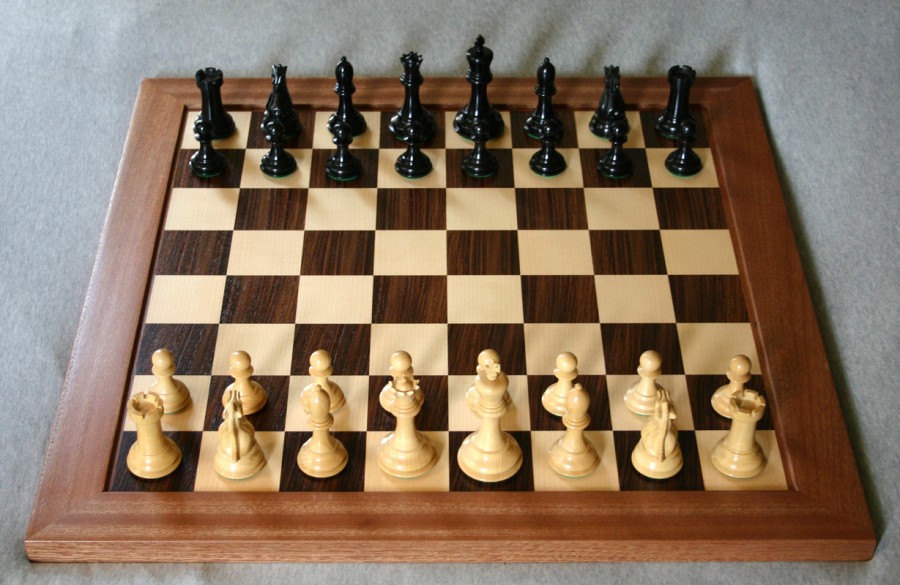
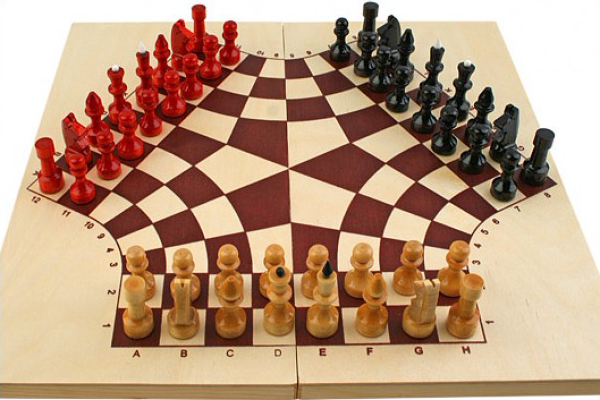
Chess boardNow with board games, you have the rules of the game, which encompass how pieces can move, how a turn plays out and what the victory conditions are. The other half of that puzzle is the design of the actual board, which could be seen as the level design of the game. It’s evident that when the board is changed, the entire game changes with it. Imagine a game of chess, where the board is not 8×8 fields but instead 8×12 or maybe something more outlandish like an L shape. This will drastically change how the game is played. The same is true when a level is changed.
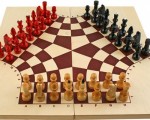
Chess Board, 3 sidesSo if you think about it, the game space is nothing but another set of rules. They’re just visualized as a space to make it easier for us. Instead of rolling a die and tracking the movement pieces on a board, we could simply use numbers to denote a token’s position. Say if you’re on field “3” and roll a 5, you wouldn’t move your piece 5 spaces, you’d write down “8” instead. And then if there’s “special fields” you’d have a table where you could look up the number and see if there are any special rules for it. It’s obvious that this is a lot more complicated than moving a piece on the board, which is why we use spaces for a lot of our board games.

So if game spaces are just rules why is there a split between game and level design? There is no such thing in board game design, right? Well the answer’s simple: In the early days of game development there was no seperation: there often was just one person making the entire game, designing the rules, the spaces, the graphics and the sounds. But Because the increasing amount of content and complexity required specialization we now have different people doing different parts of the same job.

So with all that said, let’s look at that definition again:

Level Design is the process of designing and implementing the (spatial) rules of a video game

And let’s look at Wikipedia’s definition of Game Design

Game Design is the process of designing the content and rules of a game

Sounds awfully similar, doesn’t it? There’s just a few differences:

  • Level Design only deals with those game rules which are manifested as spaces
  • Level Design is also responsible for the implementation of these rules in the game
  • Level Design only really exists as a discipline in the realm of video games

I rest my case.

No More Wrong Turns is online

Navigation ToolsThe article I’ve been mentioning and working on in the past couple of weeks is finally online. You can read No More Wrong Turns over at Gamasutra. It deals with ways that Game and Level Designers can steer the movement of players.

Give it a read and please let me know what you think. I’m eager to get some feedback. Feel free to post a comment over at Gamasutra or here on my blog.

Edge Panel on Architecture and Videogames

I just stumbled over this feature from Edge magazine called Architecture and Videogames. It’s a recording of a panel on – who would have guessed – Games and Architecture. It’s avilable as an mp3 on the link above and it’s really interesting. I’ve found inspiration to get back to two blog articles I’ve already started. Be warned though, the recording is quite long.

The panel is made up out of a mix of people who have a background in both architecture and video game development. They do make a lot of interesting points on what digital game architecture is and how it relates to physical architecture. I particularly liked the comments about the design of experiences, something that’s firmly in the realm of level design. It’s the job of a level to provide an entertaining joyride with highs and lows. On the other hand there’s few architectural spaces that are designed to provide experiences. The few exceptions that do are things like theme parks or monumental architecture.

TF2 Map Progress

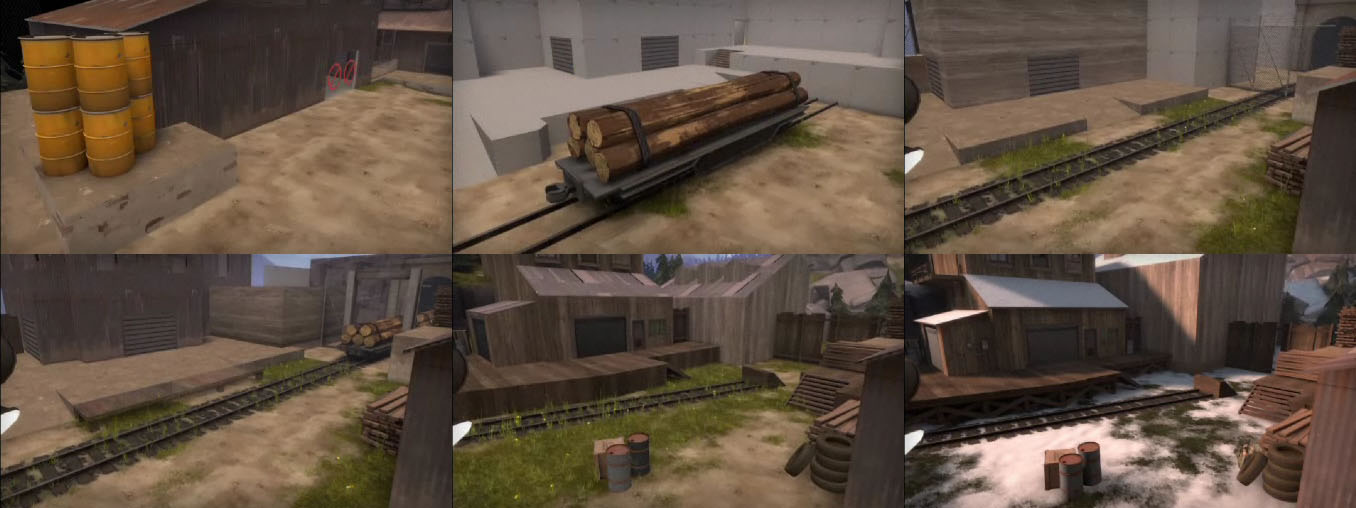
Over on the official Team Fortress 2 blog the guys from valve have just released some behind the scenes info on their mapping process for the new KotH Viaduct map. They’ve also been so nice as to include some time-lapse videos of the different map stages. This is a nice view at their work process. I have to admit though that the entire article is not very deep but nice to look at instead.

I say give it a look here: This point ain’t gonna cap itself!

tf2_viaduct-process

What struck me as odd in the videos was that the map was textured almost from the beginning. I would have enjoyed seeing some early footage in a raw, temporary textured state where they were still blocking out the basic shape – if they had such a stage. It might well be that they have enough experience with the game to be able to plan a map well on paper.

Regardless I certainly like the mention of valve doing playtests of the gamemode in modified, existing maps first to get a feeling for it’s dynamics. And I like the fact that they’ve set themselves a specific goal for the map: “we wanted a game mode that had an intense, centralized experience with quick player turnaround”. After playing the map for a while I certainly agree that they’ve suceeded at that.

There’s one thing I’m missing though: There’s no real side-route to get behind enemy lines. This is fine since it forces all action into the central spot as was the goal but I feel it hampers a few classes, especially the Pyro and the Spy. Still it’s a nice map and some nice videos I wanted to point you guys to.

It lives!

Alright. The big article is done. It’s going through reviews currently and I’ve also submitted it to Gamasutra. If they approve then all that’s left is to add a whole bunch of pretty pretty pictures. But that stuff always takes way more time than you’d expect. I know cause I keep underestimating this.

Anyway, the title of the article is now:

No More Wrong Turns
Game Design tools and Level Design methods that help players better traverse your game worlds

Working on Navigational Tools

Hey everyone. No need to worry, I’m still around. I’ve spent the last couple of days working on an article about navigation in video games. It’ll be done soon and then I’ll try and submit it to Gamasutra and possibly also post it here. It’s gonna be good.

And just to tease you guys a little, here’s the introduction:

Alright my dear readers, today I’m going to talk about navigation through the spaces of video games and the different tools that help us with that. This is mostly going to be relevant for 3d environments but much can be applied to 2d graphics as well. Also please bear with me, this is going to get quite long.

With the ever increasing complexity of our games and our game spaces, the need for some support has increased just as well. The earliest games often consisted of only one screen. All the action of the game was immediately visible at a glance. Think of Space Invaders or Pac Man. There are no hidden corners, no secret objectives. Nothing. These games are games of (almost) perfect information: You can see all there is to the game. All pieces are on the board, so to speak.

Nowadays it’s a lot different. The ability to display the entirety of the gameworld on one screen was quickly abandoned in favor of larger environments. Be this through scrolling or through leaving one screen and entering the next. The step to immersive, open worlds in 3d has just emphasized this even more. And that’s before we add the increasing complexity of the gameplay on top of it. Don’t fret it though, there’s help.